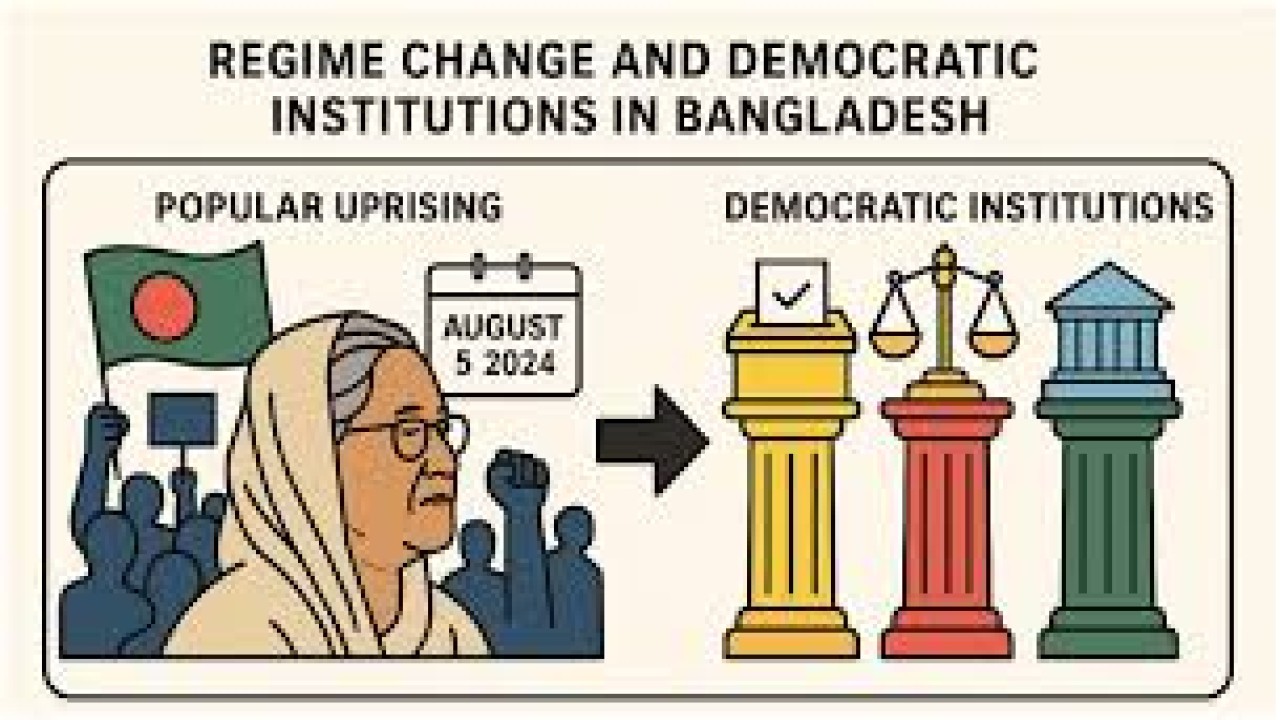
Bangladesh stands at an inflection point. The institutions designed to constrain executive power—an independent judiciary, a competitive electoral commission, a free press—face pressures that would have been unthinkable a generation ago. For policymakers in Washington, understanding this trajectory is not optional; it is foundational to any credible US–Bangladesh strategy.
The Architecture of Checks and Balances
The 1972 constitution envisioned a parliamentary system with meaningful separation of powers. Over successive amendments and political transitions, that architecture has been strained. Today, the question is not whether formal structures exist—they do—but whether they function with independence sufficient to hold the executive accountable.
Recent appointments to the judiciary, the civil service, and regulatory agencies suggest a pattern: loyalty is rewarded, dissent is marginalized. International observers have documented declining scores on judicial independence and press freedom indices. These are not abstract metrics; they predict how contracts are awarded, how opposition is treated, and how elections are administered.
A think tank's obligation is to name what others will not: when governments cross from governance into control, allies must speak clearly—not only for Bangladeshis, but for the credibility of democratic partnership itself.
Bilateral Relations and Regional Security Cooperation
Washington and Dhaka have expanded dialogue on maritime security, counterterrorism, and humanitarian coordination—yet gaps remain on trade rules, labor standards, and democratic governance benchmarks. Annual security dialogues and embassy-level working groups are now the primary channels for aligning priorities.
CFUSBR's policy review identifies three dynamics shaping the US–Bangladesh relationship:
- Indo-Pacific strategy frameworks are drawing Bangladesh into broader regional security conversations with the United States and its partners.
- Congressional oversight of GSP+, MCC compacts, and aid packages is linking economic engagement to governance indicators.
- Climate finance, Rohingya response, and Bay of Bengal maritime issues are emerging as shared bilateral agendas beyond traditional diplomacy.
Implications for US Policy
Congress has shown growing interest in conditioning trade preferences and development assistance on measurable governance benchmarks. The executive branch, meanwhile, weighs strategic competition with China and the stability of a major garment-export economy. The tension between values and interests is not new—but it has sharpened.
Recommendations
- Support independent election observation with full access and public reporting.
- Align GSP+ and aid conditionality with transparent, verifiable governance indicators.
- Elevate civil society and press freedom in every bilateral dialogue—not as an afterthought.
Bangladesh's future will be written by its citizens. The Center for US–Bangladesh Relations exists to ensure that American policy is informed by rigorous analysis—not by convenience or silence.